Hydro Excavation for Water Lines, Sewer Lines, and Underground Utilities in the Brazos Valley
You walk out to the yard and it looks like a carnival of little flags. Pink, orange, and yellow clustered right where you need to dig. Somewhere under that grass runs your water line, maybe your sewer lateral, and possibly a gas or electric line you never knew was there. You need to get down to it, but one wrong swing of a shovel or one pass with a rented digger and a simple project turns into a flooded trench or something far more serious.
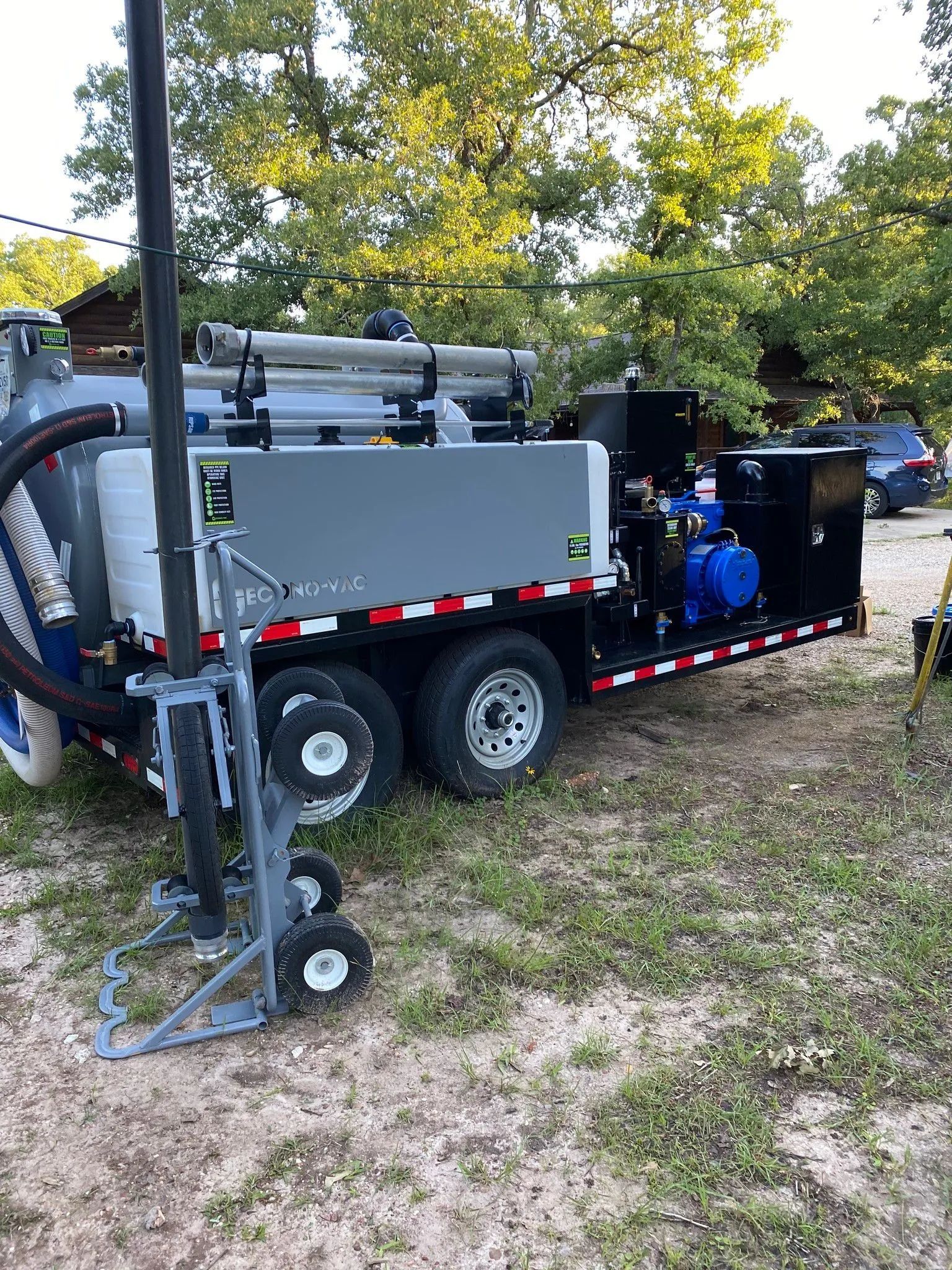
Here is the most important thing to know before you break ground: you do not have to dig blind. Hydro excavation uses pressurized water and a powerful vacuum to wash soil away and lift it out, exposing whatever is buried without ever striking it. The pipe, the conduit, the line you are worried about stays untouched while the dirt around it disappears. After years of opening ground across the Brazos Valley, we can tell you the method you choose matters far more than how carefully you swing a shovel.
What Hydro Excavation Actually Is
Hydro excavation replaces steel teeth with water and air. A stream of pressurized water breaks the soil loose while a high flow vacuum pulls the resulting slurry up through a hose into a holding tank. What you are left with is a clean, precise hole and an exposed line that never took a hit.
The reason this matters comes down to physics. A backhoe bucket or an auger cannot tell the difference between packed clay and a sewer pipe until it is too late. Water can. It erodes soil at a controlled rate and flows around a pipe instead of cracking it. That is why this approach is called nondestructive digging, and why it has become the standard for working close to anything buried you cannot afford to damage. For tougher ground we heat the water, cutting through dense soil that would stall a hand crew for hours.
Why It Is the Safer Way to Reach Water and Sewer Lines
Water lines and sewer laterals are exactly where careless digging causes the most damage. A nicked water line floods a yard in minutes. A cracked sewer lateral leaks slowly and quietly until you smell it, and by then the repair is bigger than the original job.
When we need to expose a leaking main or reach a sewer line, hydro excavation opens a narrow window right down to the pipe without disturbing everything around it. On older properties across the Brazos Valley we frequently find water mains and sewer laterals running closer together than any map suggests, sometimes within a foot of each other. Washing the soil away instead of cutting through it means we see exactly what is down there before anyone commits to a fix. That same control protects tree roots, sprinkler lines, and the rest of your yard, leaving a tidy access point instead of a wide open trench.
Exposing Underground Utilities Without the Guesswork
Locate marks tell you a line is somewhere nearby. They do not tell you the exact depth, and they carry a horizontal tolerance that can put the real line a foot or more off to either side. That gap is where strikes happen.
Potholing, sometimes called daylighting, solves this. We open a small verification hole and physically expose the utility so its exact position and depth are confirmed before any larger work begins. The stakes climb with what is buried. A struck fiber line knocks out service for a whole block. A struck gas or electric line is a danger to everyone on site. In the fast growing corridors around College Station and Bryan, where new utilities are packed into ground that already holds older lines, that confirmation is often the difference between a smooth job and an emergency.
Why Brazos Valley Soil Changes the Job
The ground here does not behave like the national average, and that single fact shapes every dig. Much of the Brazos Valley sits on heavy expansive clay, the dark sticky soil that swells when it rains and shrinks hard through a dry Texas summer. That constant movement is one of the real reasons buried lines shift, stress, and eventually crack.
That same clay makes mechanical digging risky. When it dries out it sets up almost like concrete, and a powered digger fighting through it can lurch into the very pipe it was sent to find. When it is saturated it turns to a mess that collapses back into the hole. Heated hydro excavation handles both, cutting cleanly through baked clay and lifting out spoil a shovel only smears around. Bottomland soils near the Brazos and Navasota rivers run deep and dense, and the live oak and post oak roots common across the region love to wrap into sewer laterals.
When Hydro Excavation Is the Right Call
Reach for this method any time you are digging close to something you cannot afford to break. That includes exposing a water line, accessing a sewer lateral, verifying utility depth before boring, working in congested corridors where several lines run together, or fighting ground so packed a shovel barely dents it.
It is also the right call when you simply do not know what is below. If a property has had multiple owners, additions, or rounds of utility work, the records rarely match reality. We see it constantly here. The map shows one thing and the ground holds another. For shallow, open ground with nothing buried nearby, traditional digging is still fine. The moment a buried line enters the picture, the math changes, and protecting it takes far less effort than repairing it.
Mistakes That Turn a Simple Dig Into a Repair
The most common mistake is trusting locate flags as if they mark the exact spot. They are a strong guide, not a guarantee, and treating them as precise is how a shovel finds a line nobody meant to touch. Always assume the real position sits within a margin of where the paint lands.
Another easy misstep is renting a powered digger to save time in our clay. In soft soil that works. In dense Brazos Valley clay, the machine grabs and jumps, and that sudden movement near a buried line is exactly what cracks it. The third mistake is digging during or right after heavy rain. Saturated clay slumps back into the hole and hides what you are trying to reach, while bone dry clay sets so hard that hand digging becomes nearly pointless.
Frequently Asked Questions
Is hydro excavation safe around gas and electric lines?
Yes, it is one of the safest methods available. Because water and vacuum remove soil instead of cutting through it, there is no blade or steel tooth to strike a buried line. That makes hydro excavation the preferred way to expose gas, electric, fiber, and telecom utilities, letting us confirm their exact position and depth before any larger work begins safely on the job site.
How deep can hydro excavation dig?
It reaches well past typical utility depths, comfortably working several feet down and going deeper when a job calls for it. The vacuum lifts spoil the entire way up, so depth stays fully controlled and the hole walls stay clean and stable throughout. That precision lets us reach lines buried far below the surface without ever disturbing or collapsing the surrounding ground we leave behind.
Will it damage my water or sewer line?
No, it will not. The pressurized water gently erodes soil and flows harmlessly around your pipes rather than cutting through them. This is exactly why we rely on it to expose fragile water and sewer lines for inspection or repair. Mechanical equipment can crack older pipe with a single careless contact, but water simply washes the dirt away and safely leaves the line completely untouched.
Why is hydro excavation better in Brazos Valley clay?
Local clay bakes hard as concrete in the summer and turns sticky and unstable when it rains, defeating hand shovels and jolting powered diggers straight into buried lines. Heated water cuts cleanly through the hardened ground while the vacuum lifts saturated spoil that raw machinery only smears around. That combination handles both extremes our regional soil throws at every dig we open across the region.
How long does a hydro excavation job take?
Most utility exposure and potholing jobs wrap up in a single visit, often within a few hours, though the exact time depends on depth, soil conditions, and how many lines need verifying. Confirming a line precisely up front almost always beats repairing a strike later, which is why we never rush the part that protects everything buried beneath your property before any larger work starts.
Reliable Nondestructive Digging Backed by Real Experience
The rule that holds across every job is simple: expose a buried line before you trust where it sits, because the ground rarely matches the map. In the Brazos Valley that rule carries extra weight, since expansive clay shifts lines over time and punishes any dig that relies on guesswork. With 35 years of opening ground the safe way, MVR-TX Construction brings hydro excavation to water lines, sewer lines, and underground utilities across College Station, Texas. When you need to reach what is buried without risking a strike, call us before the first shovel goes in, and we will daylight your lines cleanly, confirm exactly what is down there, and set your project up to finish right the first time.